Stroke Rehabilitation in Sharjah

Comprehensive, Coordinated Rehabilitation for Stroke Recovery

Recovering after a stroke requires more than a single treatment. At TAM Physio & Rehab, we provide individualised neuro-rehabilitation combining physiotherapy, therapeutic hands-on care, mobility training and occupational therapy support to help stroke survivors work toward improved movement, independence and quality of life.
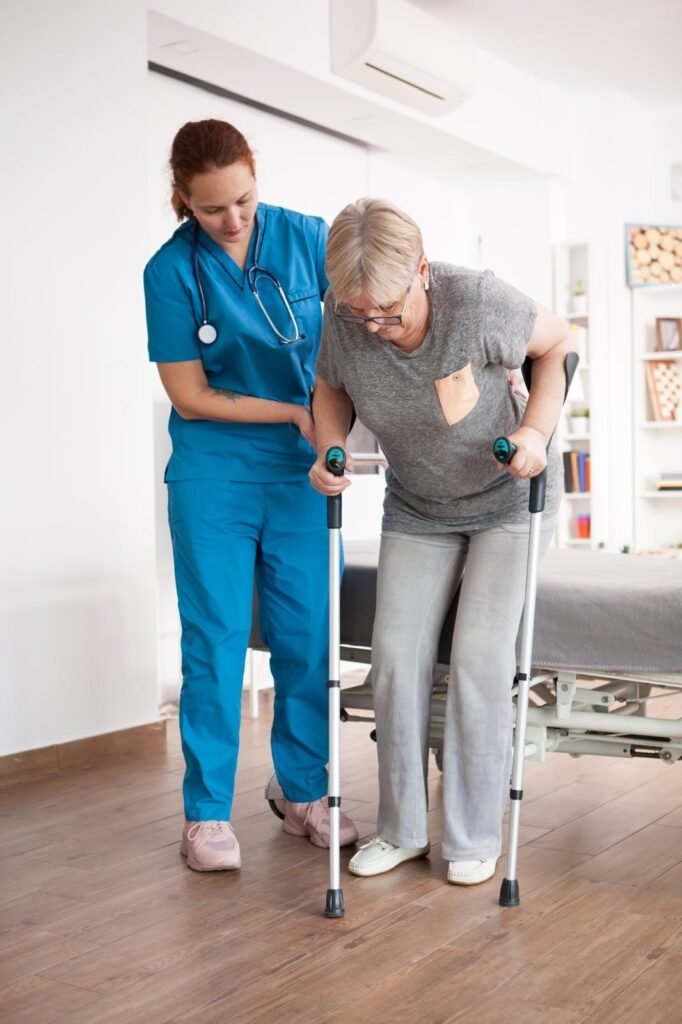
Every Stroke Recovery Journey Is Different!

Evidence-based care. Individualized goals. Licensed rehabilitation professionals

A stroke can affect movement, balance, sensation, strength, coordination and independence. For some people, simple activities such as standing, walking, dressing or using an arm become challenging.

Recovery requires patience, consistency and a structured rehabilitation plan.

At TAM Physio & Rehab in Sharjah, we focus on understanding the individual before designing the rehabilitation programme. Our approach considers the patient's physical abilities, functional limitations, goals and medical status.

We don't believe in a one-size-fits-all rehabilitation programme.


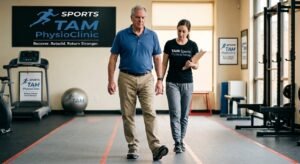
Stroke patient assessment at TAMPhysio and Rehab-Sharjah

Why Is Stroke Rehabilitation Important?

WHY REHABILITATION MATTERS

After the acute medical phase of a stroke, rehabilitation becomes an important part of recovery.The brain has the ability to adapt and reorganise through a process known as neuroplasticity. Structured rehabilitation and repeated functional practice can support the recovery and relearning of movement.Rehabilitation may help patients work towards improvements in: Mobility Balance Walking ability Strength Motor control Coordination Functional independence Confidence during daily activitiesThe timing and intensity of rehabilitation should always be determined according to medical stability and individual needs.

IMPORTANT MEDICAL DISCLAIMER SECTION

Stroke Is a Medical EmergencySudden stroke symptoms require immediate emergency medical attention.Signs may include: Sudden facial drooping Sudden weakness or numbness Difficulty speaking Sudden confusion Loss of balance Sudden vision changesRehabilitation begins after appropriate acute medical assessment and when the patient is medically stable and cleared for rehabilitation.TAM Physio & Rehab does not replace emergency stroke care, neurological assessment or hospital treatment.

COMPREHENSIVE ASSESSMENT

Comprehensive Stroke Rehabilitation AssessmentBefore beginning rehabilitation, our team performs an individual assessment to understand how the stroke has affected movement and daily function.Assessment may include:Posture & PositioningAssessment of asymmetry, sitting posture, standing alignment and compensatory movement patterns.Muscle ToneEvaluation of weakness, reduced tone or increased muscle tone that may affect movement.Range of MotionAssessment of joint movement and soft tissue mobility.BalanceEvaluation of sitting balance, standing control, weight shifting and fall risk.Gait AnalysisAssessment of walking pattern, weight-bearing, foot clearance and mobility where appropriate.Functional AbilityEvaluation of activities such as transfers, standing, walking, reaching and daily activities.Sensory & Motor ScreeningAppropriate neurological screening to understand sensory and movement-related impairments.This comprehensive assessment helps establish meaningful and realistic rehabilitation goals.
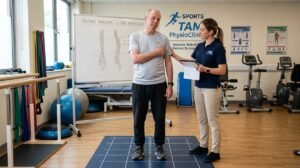
Stroke Patient gets posture analysist at TAM Physio & Rehab

Posture Analysis

Typical Hemiparetic Posture

Gait Analysis of Stroke Patient at TAM Physio Rehab Sharjah UAE

Gait Analysis

Spastic Gait Assessment
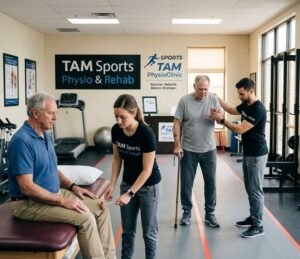
Stroke patient getting treatment (special weight bearing treadmill at TAM Physio & Rehab Clinic-Sharjah

Special Tests

Dermatomes, Myotomes and Reflexes

Comprehensive Post-Stroke Rehabilitation

OUR STROKE REHABILITATION SERVICES

Our rehabilitation approach may include the following services depending on clinical assessment and individual requirements.

Neuro Physiotherapy

Neuro physiotherapy focuses on improving movement and physical function after neurological injury.Treatment may include: Bed mobility training Sitting balance Standing practice Transfer training Weight shifting Walking rehabilitation Balance exercises Functional strengthening Motor control training Coordination exercises Postural rehabilitation Endurance training Stair trainingEvery programme is adapted according to the patient's current ability and safety.

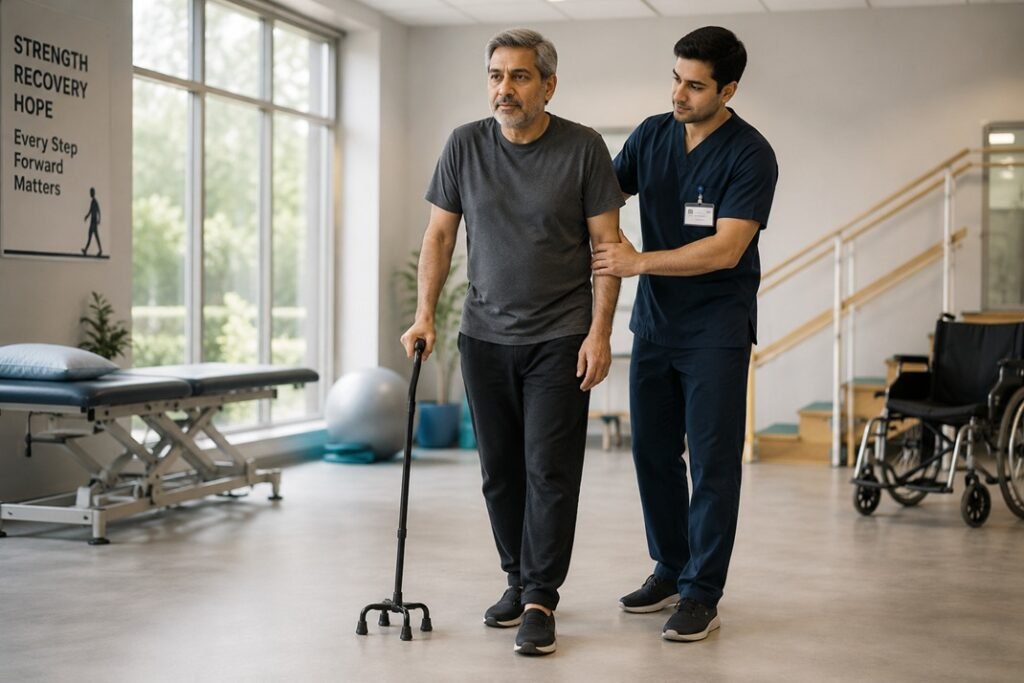
Regaining Confidence in Every StepWalking after a stroke can be affected by weakness, altered muscle control, balance problems and reduced confidence.Our rehabilitation programme may focus on: Safe standing Weight-bearing Step control Foot clearance Balance Walking pattern Turning Endurance Functional mobilityWhere clinically appropriate, walking aids and assistive devices may be incorporated into the rehabilitation plan.

The goal is not simply more walking—but safer and more functional movement.

Balance problems are common following stroke and can affect confidence and independence.Rehabilitation may include: Sitting balance training Standing stability Weight shifting Reaching activities Turning practice Functional movement training Controlled progression of balance challengesSafety is always prioritised.

THERAPEUTIC MASSAGE

Therapeutic Massage as Part of Stroke RehabilitationMassage therapy and carefully selected hands-on techniques may be used as supportive components of a comprehensive rehabilitation programme when clinically appropriate.Potential goals may include supporting: Soft tissue comfort Relaxation Management of compensatory muscle tension Movement preparation Body awareness Comfort during rehabilitationMassage therapy should not be viewed as a standalone treatment for restoring neurological function after stroke.

Instead, when appropriate, it can complement physiotherapy and functional rehabilitation.

Before hands-on treatment, stroke patients should be appropriately screened for medical considerations such as: Circulatory concerns Blood clot risks Swelling Skin integrity Reduced sensation Anticoagulant medication Blood pressure concerns Other medical precautionsEvery patient requires an individual assessment.

Some stroke survivors experience increased muscle tone or spasticity.This may affect: Walking Arm movement Hand function Dressing Positioning Comfort Daily activitiesRehabilitation strategies may include: Appropriate positioning Controlled movement Range of motion exercises Functional activity Weight-bearing Stretching strategies where appropriate Patient and caregiver educationSignificant spasticity may require medical management in coordination with the patient's physician.

Arm & Hand Rehabilitation After Stroke

UPPER LIMB RECOVERY

Patients may experience difficulty with:

  • Reaching
  • Holding Objects
  • Grasping
  • Releasing
  • Dressing
  • Eating
  • Writing
  • Grooming
  • Using everyday objects

Shoulder Care may include:

  • Appropriate positioning
  • Gentle movement
  • Shoulder control exercises
  • Scapular rehabilitation
  • Functional movement training
  • Education for patients and caregivers

Treatment Goals may include improving:

  • Shoulder control
  • Arm movement
  • Hand function
  • Coordination
  • Functional task performance

Start Your Rehabilitation Journey

BOOK A COMPREHENSIVE STROKE REHABILITATION ASSESSMENT

Stroke Recovery: Restoring Movement & Hope

A small river named Duden flows by their place and supplies it with the necessary regelialia.
It is a paradisematic country, in which

Recovery is about more than exercise.

Occupational Therapy

It is about returning to everyday life.

Occupational therapy support focuses on helping patients participate in meaningful daily activities.

This may include:

Dressing

Grooming

Eating

Bathing

Toilet activities

Hand function

Household tasks

Functional independence

Adaptive strategies

Assistive equipment recommendations

The goal is to help each patient achieve the highest possible level of independence according to their individual circumstances.

MULTIDISCIPLINARY CARE

Why a Coordinated Rehabilitation Approach Matters

Stroke can affect multiple aspects of a person's life simultaneously.

A coordinated approach helps ensure that rehabilitation goals remain connected.

Physiotherapy focuses on:

RECOVERY TIMELINE

How Long Does Stroke Recovery Take?

Every stroke recovery journey is different.Recovery depends on many factors, including:

Can a Stroke Patient Fully Recover?

Recovery outcomes vary significantly between individuals.Some people regain a high degree of independence, while others experience long-term challenges.No rehabilitation provider can ethically guarantee a specific outcome.The goal of rehabilitation is to maximise the individual's functional potential and support improvements in:

At TAM Physio & Rehab, we believe rehabilitation is most effective when treatment goals are aligned around the individual patient.

INTENSITY

How Intensive Should Stroke Rehabilitation Be?

There is no universal rehabilitation schedule suitable for every stroke survivor.The appropriate frequency and intensity depend on: Severity of the stroke Medical condition Physical tolerance Fatigue Functional ability Recovery goals Medical precautionsAn effective rehabilitation programme balances sufficient practice with appropriate rest and recovery.At TAM Physio & Rehab, treatment plans are individualised rather than based on a generic package.

Families play an important role in supporting recovery.Caregivers may be guided on: Safe patient handling Proper positioning Supporting mobility Fall prevention Home exercise guidance Encouraging independence Avoiding unsafe movements

Support the patient—but don't do everything for them.Encouraging safe independence can be an important part of rehabilitation.

HOME SAFETY

Creating a Safer Home After Stroke

Simple environmental changes can reduce risks and improve independence.

WHY CHOOSE TAM PHYSIO & REHAB

Your Recovery Deserves an Individual Plan

At TAM Physio & Rehab, our approach to stroke rehabilitation is built around the individual—not a generic protocol.

Our Approach:
Comprehensive Assessment
Understanding the patient's unique challenges before treatment begins.

Individualised Rehabilitation
Programmes designed around ability, goals and medical status.

Functional Focus
Training designed around real-life movement and activities.

Coordinated Care
Rehabilitation strategies aligned around common patient goals.

Evidence-Based Practice
Clinical approaches guided by current rehabilitation principles.

Family Education
Supporting caregivers with practical guidance.

Progress Monitoring
Regularly reviewing goals and adapting the rehabilitation program.

Post-stroke patient physio and rehab at TAM Physio & Rehab Sharjah

EARLY REHABILITATION Why the Post-Stroke Rehabilitation Window Matters

The weeks and months following a stroke can be an important period for neurological and functional recovery.

During this time, structured rehabilitation may help patients practise movement and functional activities consistently.

However, recovery does not necessarily stop after the early stages.

Many stroke survivors continue working toward meaningful improvements over longer periods.

The rehabilitation programme should focus on:

✓ Appropriate timing
✓ Medical safety
✓ Repetition
✓ Functional practice
✓ Progressive challenge
✓ Individual goals
✓ Consistency


Frequently Asked Questions (FAQ) About Stroke Rehabilitation

When should physiotherapy begin after a stroke?

Rehabilitation should begin when the patient is medically stable and when appropriate according to the treating medical team.

Physiotherapy can help improve mobility, balance, strength and walking ability. Recovery outcomes vary between individuals and cannot be guaranteed.

Massage may be appropriate for some medically stable patients, but a thorough assessment and screening for medical precautions are essential.

Some individuals continue to make functional improvements over time. The potential for improvement varies between patients.

How often should a stroke patient attend rehabilitation?

The frequency depends on medical status, functional ability, tolerance and rehabilitation goals. An individual assessment helps determine an appropriate programme.

Neuro physiotherapy focuses on helping people with neurological conditions improve movement, balance, mobility and physical function.

Caregivers should avoid pulling on the affected arm, forcing painful movements or encouraging unsafe mobility without professional guidance.

Balance training, strengthening, mobility practice and home safety strategies may help address factors associated with falls.

Begin Your Rehabilitation Journey With a Comprehensive Assessment

Recovery after stroke is a process that requires appropriate medical guidance, patience and consistent rehabilitation.If you or your loved one has been medically cleared for rehabilitation, a comprehensive assessment can help identify current challenges and establish meaningful goals.

Stroke Rehabilitation Services at TAM Physio & Rehab

©2019. Elements Kit. All Rights Reserved.

Scroll to Top
SEO by Smart SEO Booster