
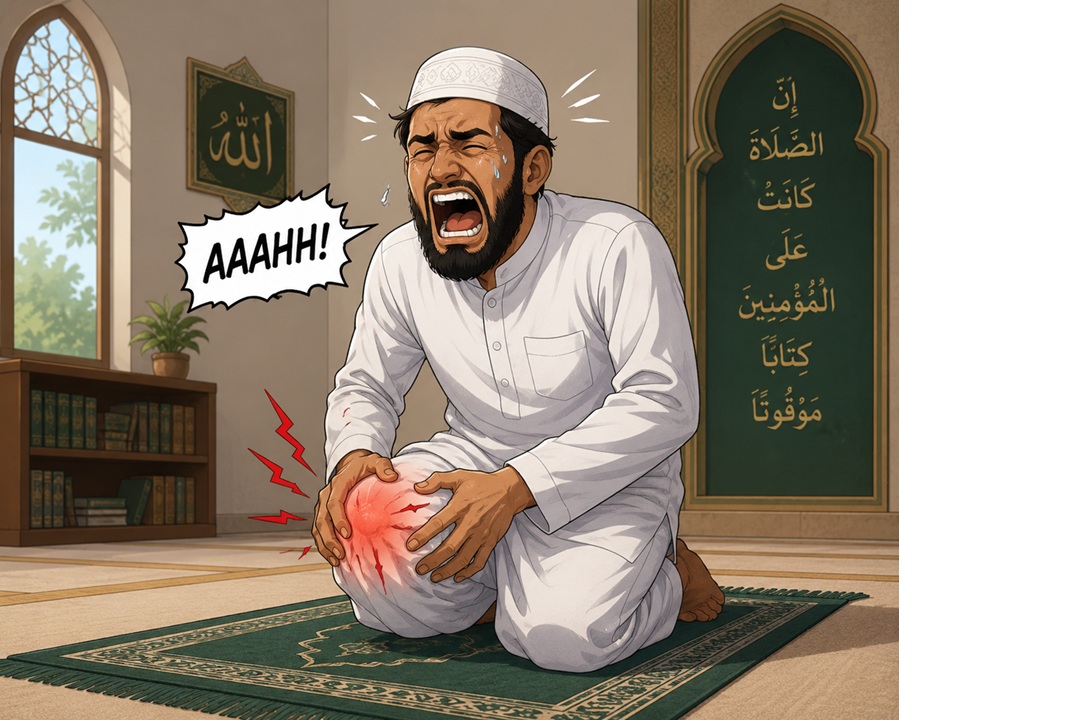
Causes of Knee Pain
At TAM Physio & Rehab Clinic, we provide comprehensive assessment and evidence-based treatment for both acute and chronic knee conditions. Our experienced physiotherapists perform detailed posture analysis, gait assessment, joint mobility evaluation, muscle strength testing, and specialized orthopedic tests to identify the root cause of your knee pain. Based on your diagnosis, we create an individualized rehabilitation program to relieve pain, restore function, and help you return to your active lifestyle safely.Whether your symptoms are caused by osteoarthritis, ligament injuries, sprains, sports injuries, or overuse conditions, early assessment and appropriate treatment can significantly improve recovery and long-term joint health.
Anatomy of Knee Joint (3D-View)
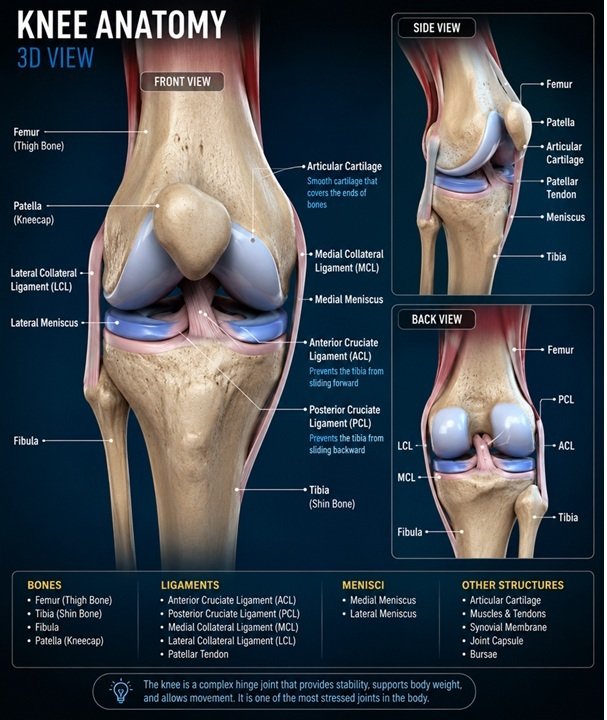
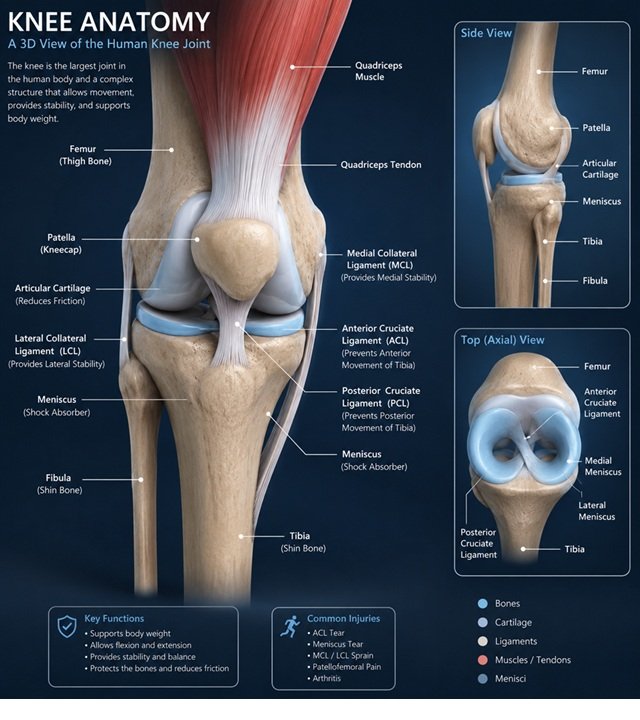
Anatomy of the Knee Joint: The knee is composed of three bones:Femur (thigh bone)Tibia (shin bone)Patella (kneecap)These form two main articulations: Tibiofemoral joint Patellofemoral joint
The joint is stabilized by several structures:Static stabilizers Joint capsule Medial meniscus Lateral meniscus ACL PCL MCL LCL Articular cartilageDynamic stabilizersThese are the muscles crossing the knee.
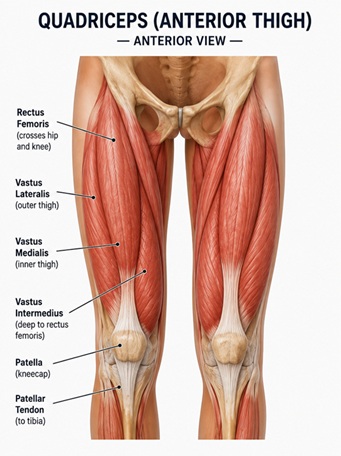
Quadriceps Femoris
(Front of Thigh)
Quadriceps Femoris
(Front of Thigh)
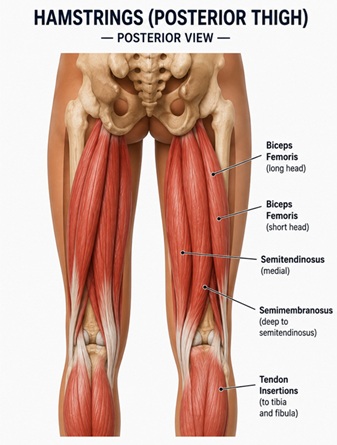
Hamstrings
(Back of the Thigh)
Hamstrings
(Back of the Thigh)
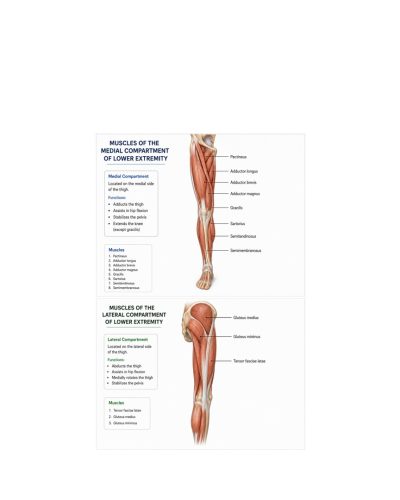
Hip Adductors
(Inner Thigh)
Hip Adductors
(Inner Thigh)
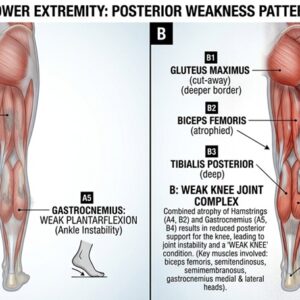
Lower Leg Muscles
Back View.
Lower Leg Muscles
Back View.
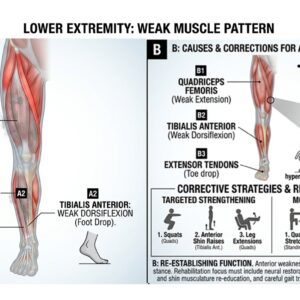
Lower Leg Muscles
Front View
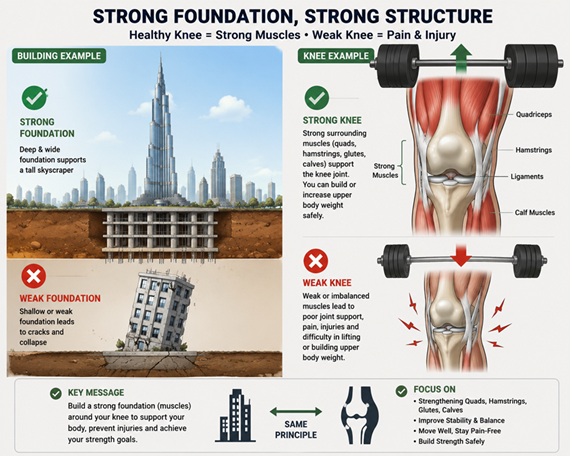
Strong Muscles Strong Knee
Weak Muscles Weak Knee
Strong Muscles Strong Knee
Weak Muscles Weak Knee
Why Strong Muscles Are Essential
Muscles are the body's natural shock absorbers.Every step produces a ground reaction force that travels from:Foot → Ankle → Knee → Hip → SpineIf muscles contract efficiently, they absorb a substantial proportion of this force before it reaches cartilage and bone.Strong muscles help by: Stabilizing the joint Controlling excessive movement Protecting ligaments Reducing compressive forces Improving balance Enhancing proprioception Distributing loads more evenlyFor example:The vastus medialis obliquus (VMO) helps guide proper patellar tracking, while the hamstrings help reduce anterior tibial translation, assisting the ACL.
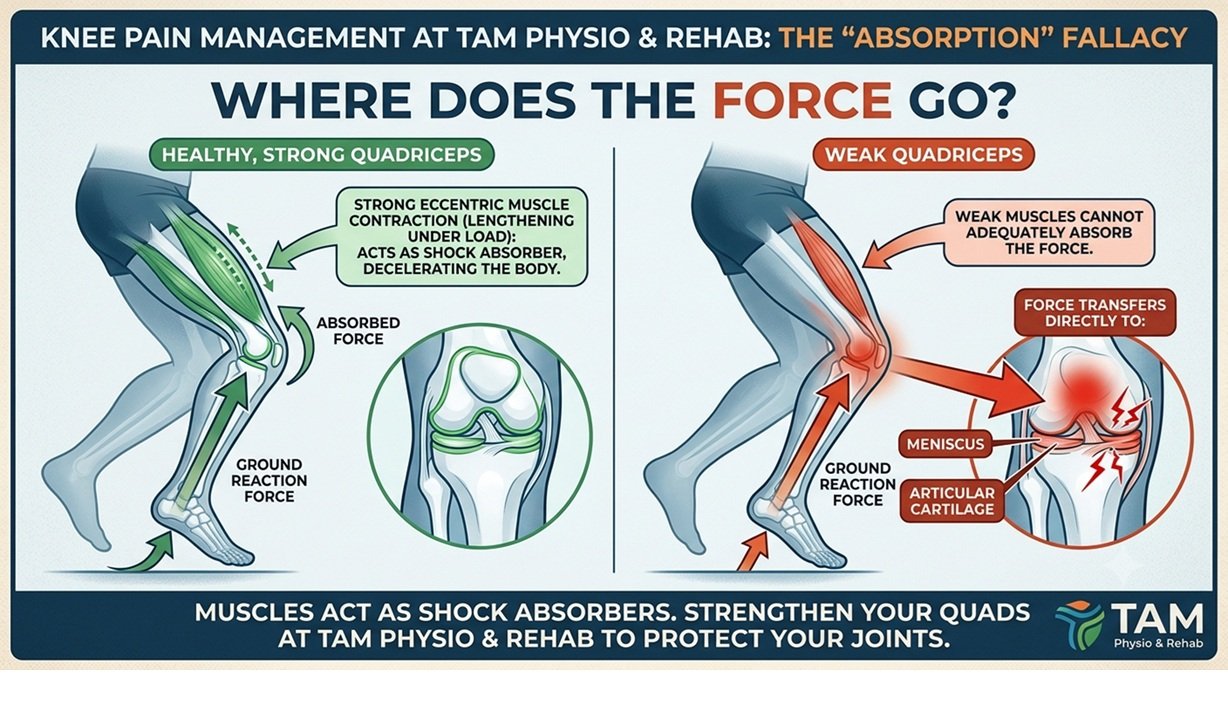
What Happens When Muscles Fail to Absorb Shock?When muscles become weak, fatigued, or poorly coordinated: Joint reaction forces increase. Cartilage experiences higher compressive loads. Menisci bear greater stress. Ligaments compensate for instability. Abnormal movement patterns develop. Patellar tracking may become altered. Bone is subjected to higher impact.Over time, this can contribute to: Patellofemoral pain syndrome Meniscal degeneration ACL injury Tendinopathy Early cartilage wear Functional instabilityHowever, muscle weakness is one risk factor among many; it is not the sole cause of joint disease.
5. Can Strong Muscles Prevent Osteoarthritis?
Strong muscles substantially reduce risk and symptoms, but they cannot completely prevent osteoarthritis (OA).Large studies consistently show that strengthening improves knee function, reduces pain, and decreases joint loading. However, OA can still develop because it is influenced by many factors, including: Age Genetics Previous knee injury Obesity Limb alignment (varus/valgus) Meniscal damage Chronic inflammation Occupational loading Metabolic factorsPeople with excellent muscle strength may still develop OA, while some with weaker muscles never do.
Does Exercise Protect Against Arthritis?
Current evidence suggests: Regular recreational exercise is generally safe for knee joints. Strength training improves muscle support, balance, and function. Maintaining a healthy body weight reduces mechanical load on the knees. Exercise is recommended for both prevention of disability and management of established OA.Exercise should be combined with appropriate recovery and injury prevention, since severe joint injuries remain one of the strongest predictors of later OA.
SPORTS & KNEE PAIN - Sports don't destroy knees. Weak muscles destroy knees.
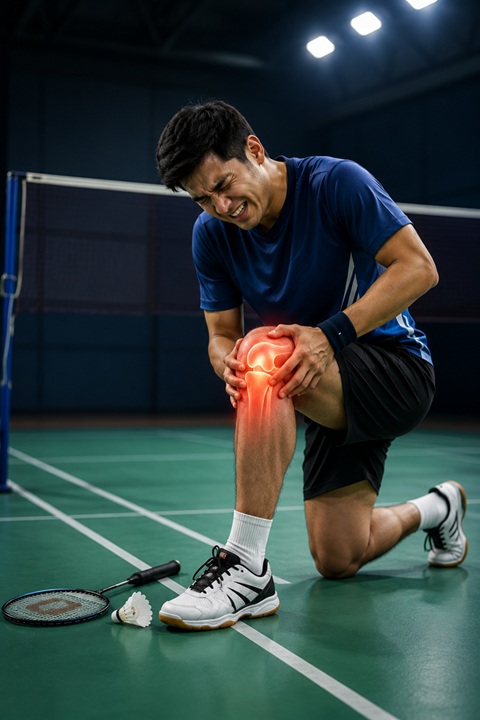
Think about it. When you sprint, your knee absorbs forces up to seven times your body weight. When you cut, pivot, or land from a jump, that force shoots through your joint in milliseconds. Your knee doesn't have a brain; it doesn't decide to 'hold up' under that pressure. It is entirely dependent on the muscles around it to absorb that energy.If your quads, hamstrings, glutes, and lower leg muscles are strong and firing in the right sequence, that massive force is absorbed like a spring. You feel powerful, explosive, and resilient.But the moment those muscles get weak, tired, or imbalanced? That force doesn't disappear. Physics doesn't care about your pain. It transfers that entire load directly onto the passive structures—the cartilage, the meniscus, the bones. Your knee becomes a crushing vice instead of a well-oiled hinge.That is why we see 18-year-old athletes with degenerative knees and 40-year-old weekend warriors being told they need replacements. It is not 'wear and tear' from playing the sport. It is 'wear and tear' from lack of muscular support while playing the sport.At Tam Physio, we don’t see sports as the enemy of the knee. We see weak, unaddressed muscle imbalances as the enemy. And we are here today to show you exactly how to fix it."
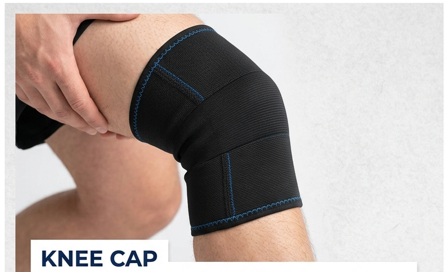
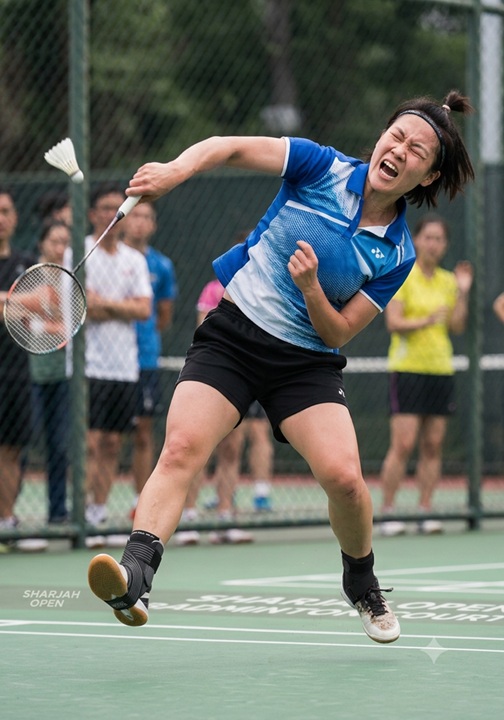
Let’s talk physics. A knee cap or ankle support is made of stretchy fabric and maybe some metal hinges. That fabric can withstand maybe 5-10 pounds of force. Now, think about a badminton lunge. When you lunge deep to the front court, your knee experiences a force of 300 to 500 pounds of pressure. Do you honestly believe a 2-millimeter piece of neoprene is going to hold your knee together against 400 pounds of force? It is not. The only thing that can withstand that 400 pounds of pressure is your muscle mass—your quads, your hamstrings, and your glutes. By wearing a knee cap, you are outsourcing your stability to a piece of fabric that cannot possibly do the job. You are cheating your body out of the stimulus it needs to grow stronger.
The Mechanical Cheat – External vs. Internal Support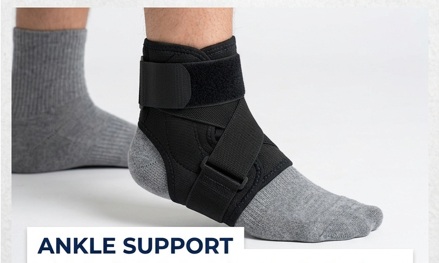
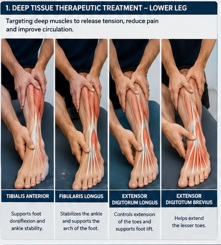
This is the most dangerous part. When you strap on a rigid ankle brace or a tight knee sleeve, you are providing external support. When the brain senses that external support, it sends a subconscious signal to the surrounding muscles: "Relax. The brace has got this." This is called muscle inhibition. Your quadriceps and fibularis longus actually decrease their firing rate when you wear a support. They become lazy. They switch off. Over weeks and months of wearing these supports, your muscles atrophy. They get weaker. They get smaller. You are essentially putting your knee's supporting muscles in a cast. And when you finally take that brace off? Your knee is weaker than when you started. You have become dependent on the brace.
The "Proprioceptive Shutdown"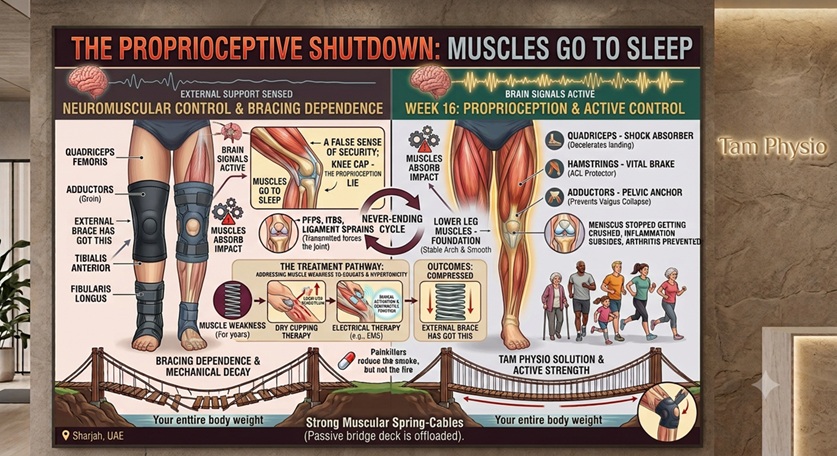
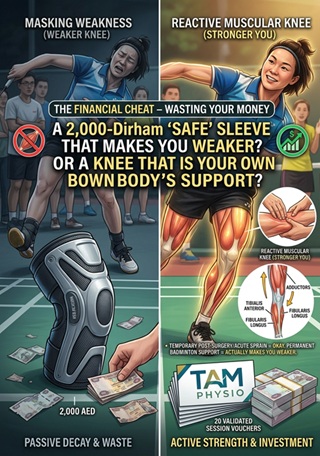
At Tam Physio, we don't sell you a brace. We build you a better body. We strengthen your quads so they act like internal knee caps. We strengthen your calves and peroneals so they act like internal ankle braces. We get you off the external supports and onto the court with bulletproof confidence—confidence that comes from genuine muscle strength, not a false sense of security from a piece of fabric. Stop cheating yourself. Start strengthening yourself. That is the Tam Physio way.
Therapeutic Treatment is Better than Aartifical Support (Knee Cap/Ankle Support)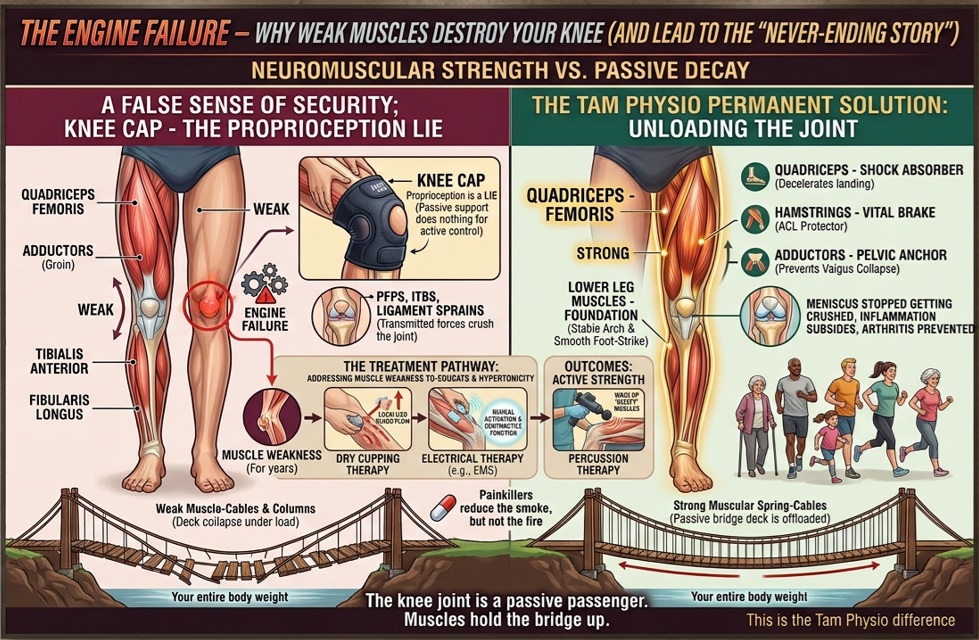
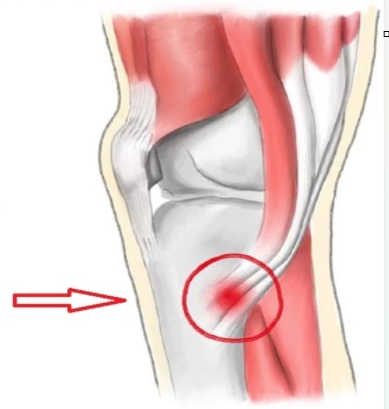
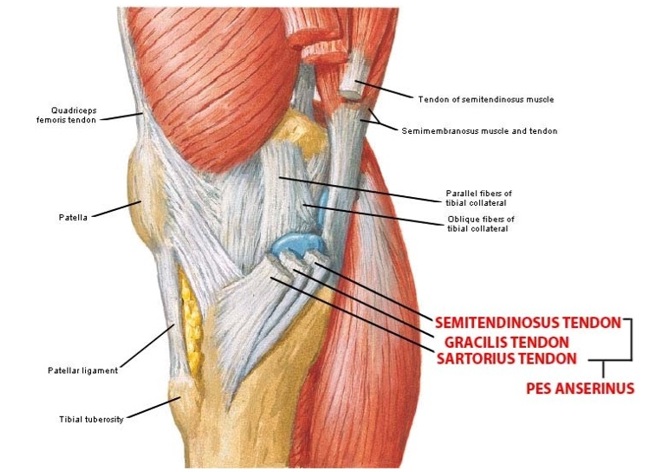
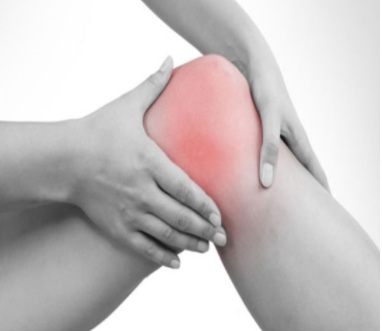
Don't let knee pain limit your worship—seek treatment, regain movement

The "never too late" mantra is real. Your muscles don't care how old you are—they only care about tension and time.
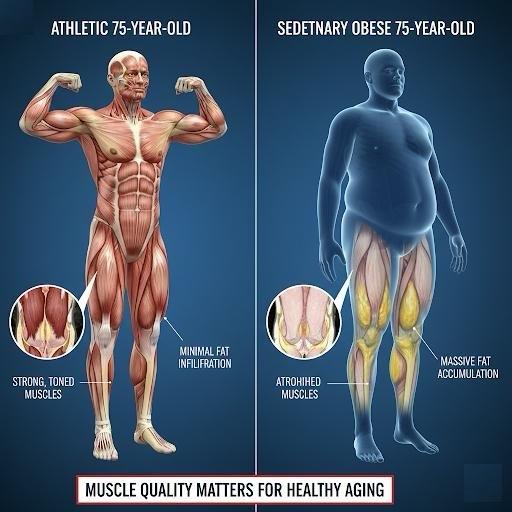
Here is our comprehensive, head-to-toe protocol to get you back to life—pain free:
Pain Lives in Layers—So Does Our Cure. Welcome to the TAM Multi Modality (MM) Approach.
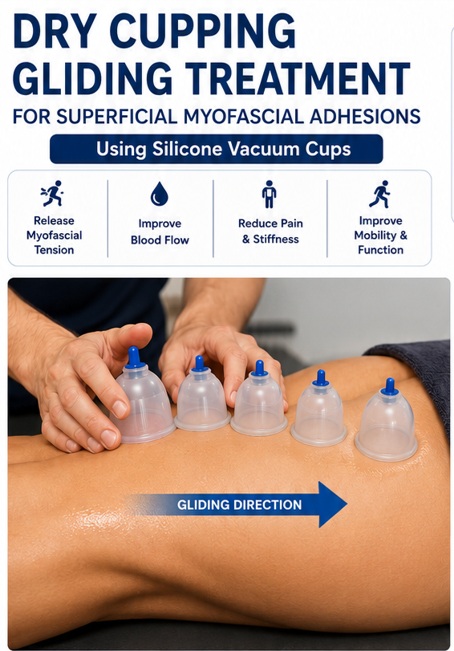
Dry Cupping Gliding Treatment
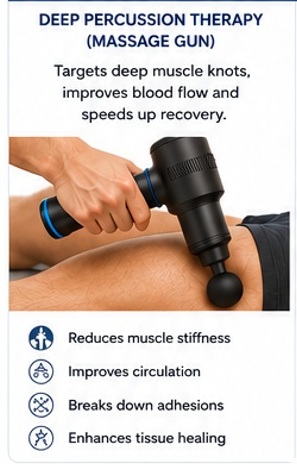
Percussion Therapy
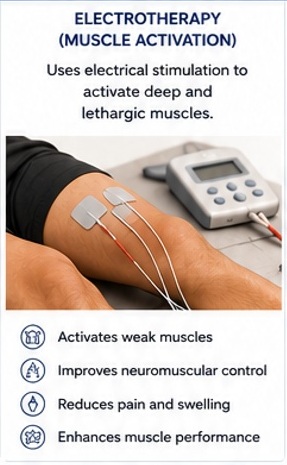
Electrotherapy
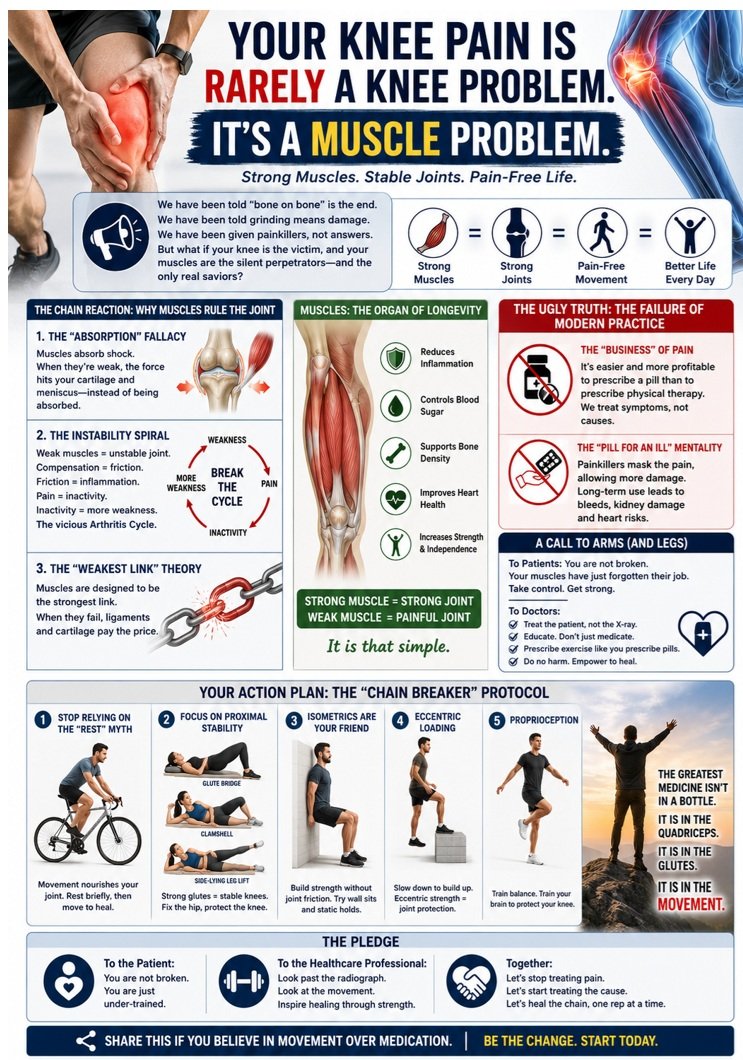
If you are reading this while clutching your knee after a long walk, or if you are popping your second anti-inflammatory of the day just to get out of bed, I need you to listen closely.We have been lied to. Not maliciously, perhaps, but systemically. We have been conditioned to believe that "bone on bone" or "arthritis" is the end of the road. We have been told that crepitus (that grinding sound) means damage. We have been handed a prescription for painkillers and sent on our way.But what if I told you that your knee pain is rarely a knee problem? What if I told you that the joint is merely the victim, and the muscles are the silent perpetrators—and the only real saviors?The Chain Reaction: Why Muscles Rule the JointLet’s break down the biomechanics. The knee is a hinge joint. It is stabilized by ligaments, cushioned by cartilage, and moved by tendons. However, none of these structures operate in a vacuum. They are entirely dependent on the dynamic stability provided by the muscles surrounding them—specifically the quadriceps, hamstrings, glutes, and calves.Think of the knee as a puppet. The joint is the wooden doll, but the muscles are the strings. If the strings are loose or uneven, the puppet falls over.1. The "Absorption" Fallacy:
When you jump, twist, or even take a step, the ground reaction force travels up your leg. Who absorbs this torque? Is it the bones? No. Bones are rigid; they transmit force. It is the muscle that acts as a shock absorber. Eccentric muscle contractions (lengthening under load) decelerate your body. If your quadriceps are weak, they cannot absorb that force. Instead, that force transfers directly to the meniscus and articular cartilage.2. The Instability Spiral:
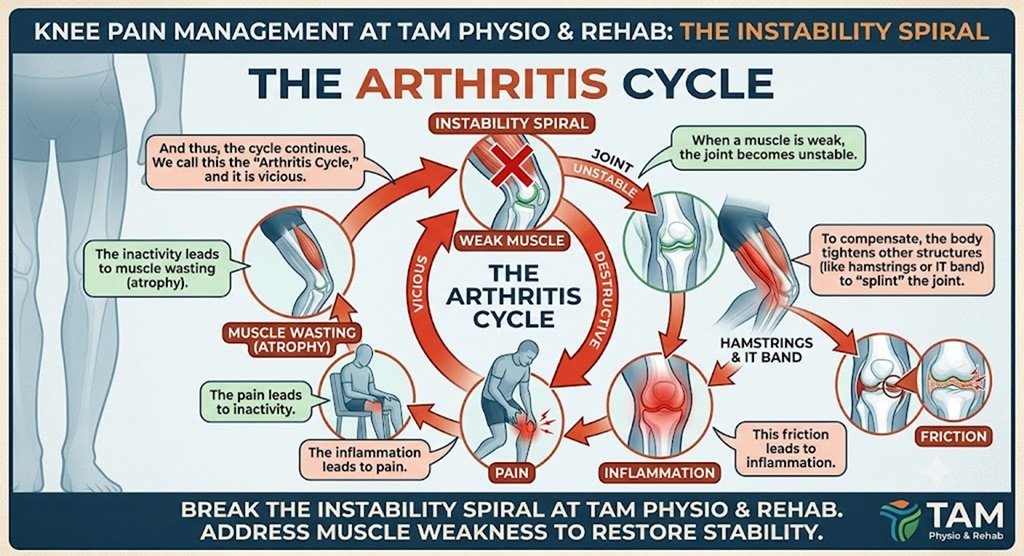
When a muscle is weak, the joint becomes unstable. To compensate, the body tightens other structures (like the hamstrings or IT band) to "splint" the joint. This leads to friction. This friction leads to inflammation. The inflammation leads to pain. The pain leads to inactivity. The inactivity leads to muscle wasting (atrophy). And thus, the cycle continues. We call this the "Arthritis Cycle," and it is vicious.3. The "Weakest Link" Theory:
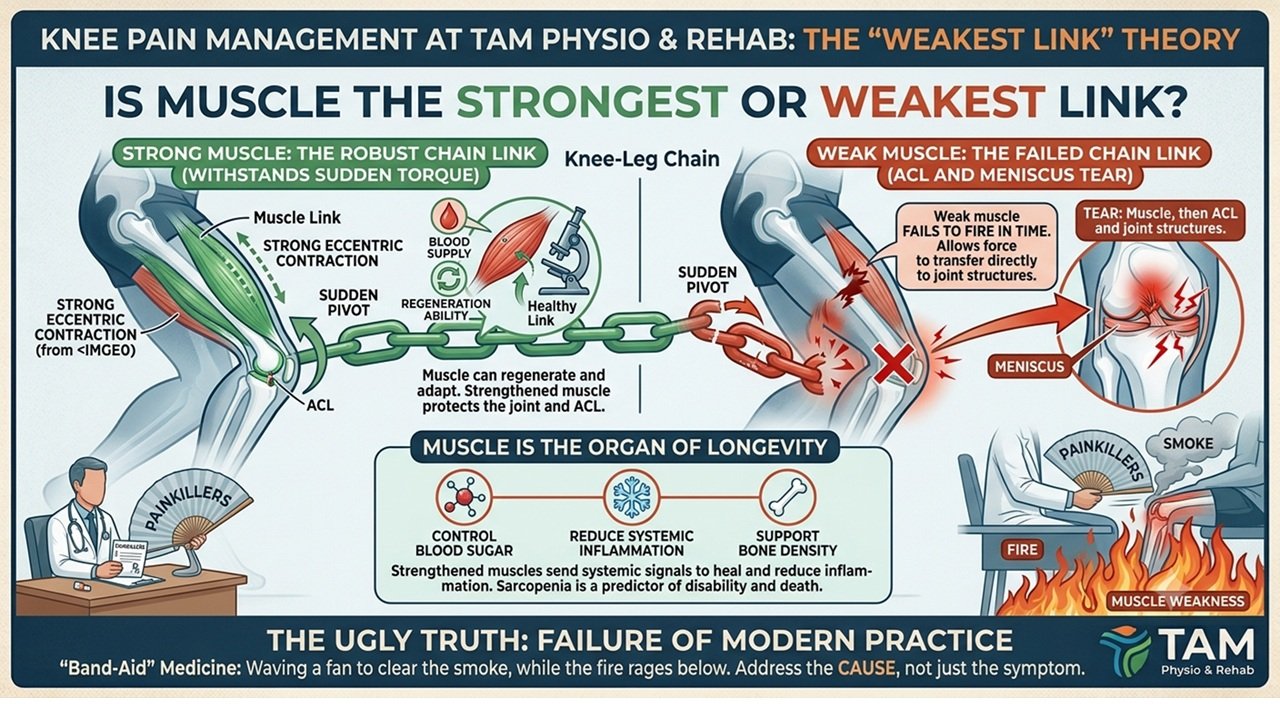
The muscle is designed to be the strongest link in this chain. It has the blood supply. It has the ability to regenerate and adapt. Yet, when we neglect it, it becomes the weakest link. A strong muscle can withstand the torque of a sudden pivot on the basketball court. A weak muscle tears, or worse, it allows the ACL to tear because the muscle failed to fire in time.Muscle is the Organ of LongevityWe often hear about heart health and brain health, but muscle health is the bedrock of human longevity. Sarcopenia (age-related muscle loss) is a primary predictor of disability and death in the elderly.Why? Because muscle is metabolic currency. It controls blood sugar, reduces systemic inflammation, and supports bone density. When you strengthen the muscles around the knee, you aren't just building a "buffer" for the joint; you are sending a systemic signal to your body to reduce inflammation and heal.Strong muscle = Strong joint.
Weak muscle = Painful joint.
It is that simple.The Ugly Truth: The Failure of Modern PracticeHere is where the article takes a sharp turn. If muscle is the solution, why is it that most people leave a doctor’s office with only a strip of paper for painkillers?The current landscape of orthopedic and rheumatologic care is broken. We are in an era of "Band-Aid" medicine. The pain is the smoke; we are told to clear the air by waving a fan (painkillers), while the fire (muscle weakness) rages on below.The "Business" of Pain:
It is easier and more profitable to prescribe a medication than to prescribe physical therapy or a gym membership. It takes 3 minutes to write a prescription; it takes 30 minutes to explain a rehabilitation protocol. Our medical system rewards volume, not value. We have turned healthcare into sick-care.The "Pill for an Ill" Mentality:
NSAIDs and corticosteroids have their place. In acute, severe inflammation, they are a necessary bridge. However, they are not a destination. Prolonged use of painkillers masks the pain, allowing the patient to continue moving in a dysfunctional pattern, which worsens the joint damage over time. We are numbing the alarm bell instead of fixing the house on fire.A Call to Arms (and Legs)This is not just an article for the patients; this is a letter to the physicians. This is a reminder of the Hippocratic Oath—the pledge taken when you became a healthcare professional."I will remember that there is art to medicine as well as science, and that warmth, sympathy, and understanding may outweigh the surgeon's knife or the chemist's drug."To the Doctors:Stop Neglecting the Musculoskeletal System: You are treating the X-ray, not the patient. An X-ray shows structure; it does not show function. A "bone on bone" knee can be pain-free if the muscles are strong enough to support it. A "clean" X-ray can be excruciating if the muscles are weak.Be the Educator: You have the power to stop the cycle. Instead of saying, "You have arthritis, take these pills," say, "You have arthritis, but we are going to strengthen your legs so you never feel it."Prescribe Exercise: Write a prescription for physical therapy. Explain why. Patients listen when you explain the biomechanics. Tell them that every squat done correctly is a deposit into their joint health bank.Practice Honest Medicine: We took an oath to do no harm. Over-prescribing opioids and NSAIDs does harm. It leads to gastrointestinal bleeds, kidney damage, and cardiovascular risks. The most "honest" medicine is the one that empowers the patient to heal themselves through movement.Your Action Plan: The "Chain Breaker" ProtocolIf you are suffering from knee pain, here is your roadmap to breaking the chain.1. Stop Relying on the "Rest" Myth:
Complete rest is the enemy of a joint. Synovial fluid (which nourishes cartilage) is pumped into the joint through movement. If you aren't moving, you aren't nourishing. Rest for a day or two for acute inflammation, but then move.2. Focus on Proximal Stability:
The knee follows the hip. If your glutes are weak, your knee caves in (valgus collapse). Start with glute bridges, clamshells, and side-lying leg lifts. If you want to fix your knee, strengthen your butt.3. Isometrics are Your Friend:
In the early stages, pain may prevent you from moving through a full range of motion. Isometric holds (like wall sits or holding a leg extension without moving) are incredible for building strength without friction on the joint.4. Eccentric Loading:
Slowly lowering yourself down from a step or a chair forces your quadriceps to absorb weight. This builds the resilience needed to protect the joint from sudden impacts.5. Proprioception:
Stand on one leg while brushing your teeth. A stable knee requires the brain to know where it is in space. Training balance trains the reactive muscle fibers to fire faster.Conclusion: The PledgeTo the patient suffering in silence: you are not broken because you have arthritis. You are broken because your muscles have failed to do their job. Take control. Get strong.To the healthcare professional: I implore you to look past the radiograph. Look at the movement. Use your hands to assess muscle strength. Educate. Inspire. And remember the pledge.The greatest medicine isn't in a bottle.
It is in the quadriceps.
It is in the glutes.
It is in the movement.Let's stop treating pain. Let's start treating the cause. Let's heal the chain, one rep at a time.Share this if you believe in movement over medication. Share this if you know a doctor who needs a wake-up call. The time to change is now.
This thorough approach helps us create a personalized treatment plan for faster and long-lasting recovery.
Why Choose TAM Physio & Rehab Clinic for Knee Pain?
SHA Licensed Physiotherapists International Clinical Experience Evidence-Based Physiotherapy Comprehensive Biomechanical Assessment Individualized Rehabilitation Programs Sports Injury & Post-Surgical Rehabilitation Modern Therapeutic Equipment Patient-Centered Care
See What Our Clients Have To Say...

The compression from a knee cap stimulates your skin's nerve endings. This creates a phenomenon called increased proprioceptive feedback. In plain English: the tight sleeve tricks your brain into feeling like your knee is more stable than it actually is. It is a neurological placebo. You feel secure, so your brain allows you to push harder, jump higher, and cut sharper. But here is the catch: While your brain is being fooled by this false security, your muscles are checking out. The knee cap offers zero mechanical support to your quadriceps. It does not help your VMO track your kneecap. It does not assist your gluteus medius in stabilizing your hip. You are putting a band-aid on a broken engine and then revving it to redline. You are asking your weak, fatigued muscles to perform at 100% intensity, but you have given them a sensory "trick" that makes you ignore their screaming fatigue signals.
KNEE CAP The Proprioception Lie A False Sense of Security